Taking Things and Autism

Last week, I went to pick up The Boy at Grammy’s, and found him playing with his iPad, and pretending to use a TI84 calculator as a game controller. “Funny, that,” I thought. “We don’t own a fancy graphing calculator…”

Because I know better, I didn’t make a big thing of it, instead casually asking where it came from. “I don’t know!” The Boy responded, happy as a clam.  You see, a few years back, he had learned from somewhere that these fancy graphing calculators (that also cost around $80) had the capability of playing games, and you could even download a Mario game on them…  At the time, I said what any self-respecting parent would say.  “No.  You can play Mario on your Wii, on your DS, and even on the computer.  You do not need a graphing calculator for the sole purpose of playing Mario.”  We took a picture of it at the store, and that was that.

Until now.  The calculator clearly belonged to either another student or the school.  The question was, was it borrowed or taken?

Do Not DisturbThe Boy has picked up a few items over the years that have to belonged to him.  We have discussed these items and returned them, sometimes stealthily, without The Boy’s knowledge.  He seems to understand in each case that it isn’t right to have things that belong to other people, but does’t completely grasp why.

So, I looked it up, and found this, which explains that lack of impulse control is a core deficit of autism, and if a kiddo on the spectrum sees something that they want and it doesn’t appear to belong to anyone, in their minds, it can be theirs.  Along with that, ownership and theft are largely social constructs, and recognizing those is a core deficit of autism, as well.

I enlisted the help of his AS teacher, and put the calculator in his backpack so that they could return it to the rightful owner tomorrow (and so his teacher could find out what had actually happened).  In the meantime, The Boy’s neighborhood friend came over and they played quietly with legos until it was time for supper.  When his friend left, The Boy could not find the blue car they had made and immediately pronounced that his little friend had stolen it. A-ha! Teachable Moment! We located the car within a few moments, and after supper talked about how he had felt when he thought his friend had taken it, and didn’t he think that might be how the owner of the calculator was feeling… He seemed to understand, and knew it had to be returned the next day.

It turned out the calculator had been left in band by an 8th grader, and The Boy had found it and made it his.  It was returned, and all was well.  By no means do I think this will be the last time something like this will happen, but this is yet another commonplace occurrence for those on the spectrum, one that could easily be misinterpreted by neurotypical peers and authority figures who don’t understand about impulse control and ownership as a social construct.  Yes, we still need awareness about all the facets of autism, so that others can use these as teachable moments, as well, and not just be met with punishment and misunderstanding.
Delayed Gratification and Rewards in Autism

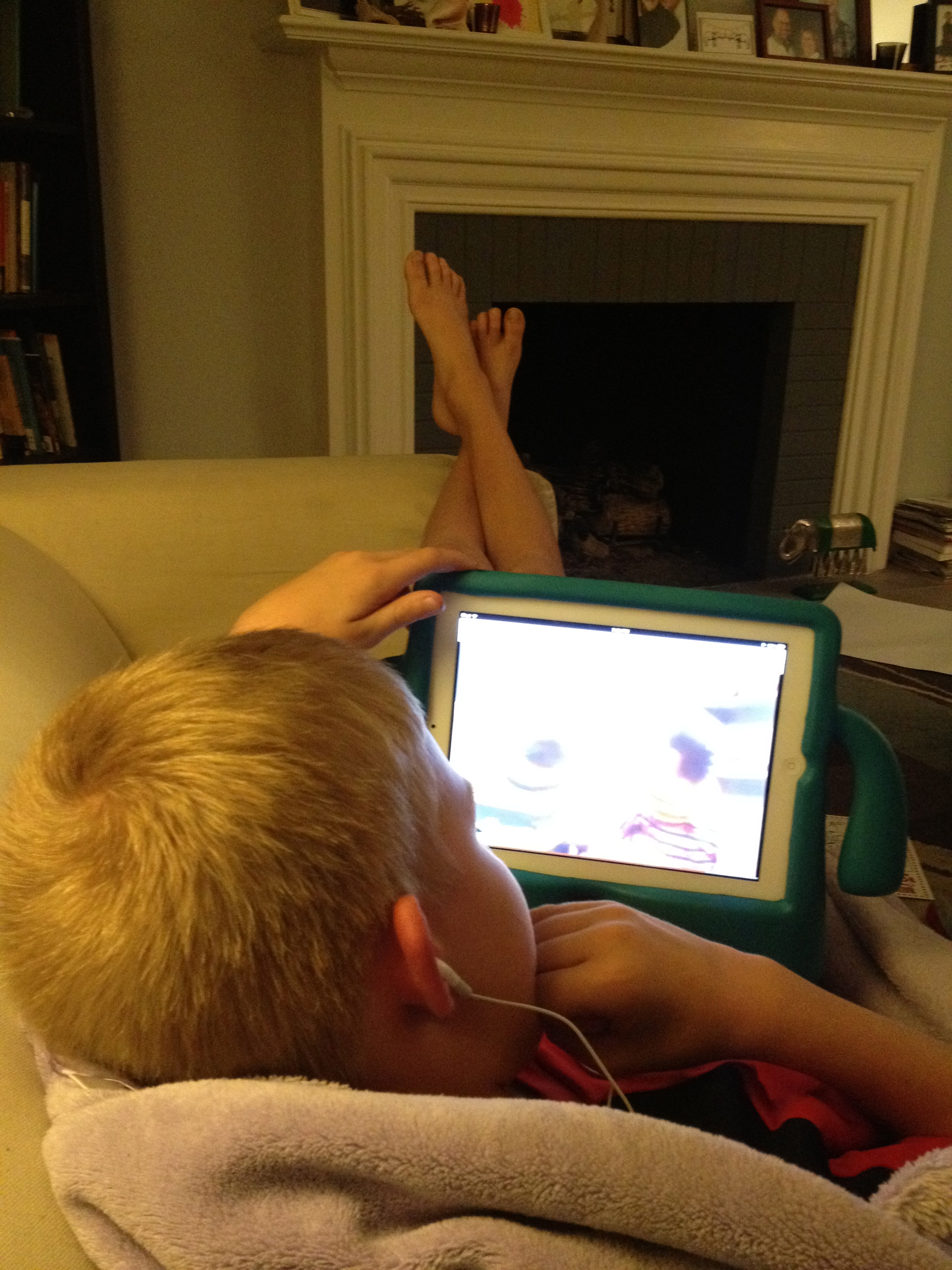
The Boy loves his iPadRewards and Motivators are how we roll in autism land.  If you want Bucky to do his math work, you gotta give him something in return.  That’s just how it works.  Whether it’s a break, a walk, a starburst, a handful of goldfish… whatever works, baby.

Fast forward to an adult on the spectrum trying to find meaningful employment, whatever that looks like.  Hopefully it is something s/he is interested in, but if not, how does it work?  Bucky wouldn’t do his math without a starburst, so will his employer ply him with starburst to get him to work as an adult?

My kiddo doesn’t understand money, and more than just the concept that it doesn’t grow on trees.  He has a hard time counting change, and instead has been taught that if he is at the store and needs to pay $4.88, he should give the cashier a five dollar bill.  He doesn’t really grasp that $150 to fix an iPad screen is a hell of a lot of money. And even though he understands that you need money to buy things, he doesn’t understand needs versus wants, and if left to his own devices, might very well decide to purchase another 3DS game rather than pay a phone bill.

He will need some assistance, and that is obvious.  But he will also need some motivation to do his job.  Therefore, as we look forward to transitioning (I know we have several years, but it’s good to be aware of where we are and where we’ll need to be), we will have to work on making sure the things we use to motivate him are growing like he is.  And we will have to work on the delay in gratification, because one does not receive a paycheck every minute, hour, or day.

This is the type of thing that isn’t intuitive for me, and that I will have to train myself to work on with him.  Everything is a process with autism.  Everything.  And nothing goes in a straight line.  A convoluted process, I guess.  We learn everyday, we fail everyday, and we try everyday.  Now to develop a plan…

Inclusion, Exclusion, Seclusion: What’s Ideal & What’s Real

Where will my boy live when I am gone?

Where will my boy live when I am gone?

I recently saw this post on FaceBook about a planned community being developed in Florida for adults with developmental disabilities.  It’s a gated community designed to foster independence, while keeping residents safe.

Immediately, I realized I had two simultaneous opinions about this.  One little voice said, “Wow! What a great idea! A place where everyone will have the assistance they need, the independence they deserve, and the safety that we parents worry so much about.”

The other little voice said, “Separate but equal,” and that statement conjured all of the negative connotations associated with  that phrase.

April will soon be upon us, and whether we are looking for awareness or acceptance (or both!), I can tell you we’re not looking for exclusion from society for our kiddos.  I have always taken The Boy out to eat, out to get groceries – we’ve never hidden from the public eye, because he needs to experience the real world, and the real world needs to experience him.

But the reality is that the world is not really set up for young adults like him yet.  Under-qualified staff are hired to monitor group homes, that are often underfunded and inadequate for those seeking to live a meaningful life as independently as possible.

So, if reality is not progressing fast enough, do we sacrifice our kids, and try to force the round peg of our ideals into the square hole of current supports for adults on the spectrum?  Or do we sacrifice our ideals a bit to get our young adults the supports they need, even if it isn’t in an ideal placement?

I don’t know the answer. I think we keep fighting for the ideal, while hoping that we’re not considered hypocrites for wanting our kids to be in a safe and supportive place.

Book Club Discussion: The Reason I Jump, “Never-Ending Summer” Part II

I’m continuing the discussion here today because The Reason I Jump is an important book.  Naoki Hagashida, at age 13, answered questions about autism from his viewpoint, and while his experiences are not the same as probably anyone else’s on the spectrum, hireasons thoughts provide insight, and provoke thought, neither of which can be bad for those of us who desperately want a glimpse into the minds of our children.

Question 32 asks about what those with autism see first when they look at something.  Naoki reinforces what I have heard in many places, that those on the spectrum see the trees first, and then the forest; the details before the whole.  He also says they tend to “drown” in the particularly striking characteristics of those parts, and it tends to be harder to see anything else. If someone you love is on the spectrum, you will have, no doubt, experienced the attention to detail.  The Boy is always drawing my attention to some small part that I never would have noticed without his help.

Question 33 asks about appropriate clothing, and why this can be a struggle for those in the spectrum.  Naoki says they know and understand why we wear the things we wear, but that they “forget” what is appropriate, and how to make themselves more comfortable. He also explains that those who choose to wear the same thing each day (we have had our battles with this, for sure!) feel like their clothes are an “extension of our bodies,” and a guard against changing situations.

Question 34 asks about perception of time. Naoki says, “the fact that we can’t actually feel it makes us nervous,” and this makes perfect sense to me.  Timers help many on the spectrum have a sense of passing time, especially those that are visual in nature. And because the future is uncertain, it is a cause for a great deal of anxiety.  This is one of those answers in this book that just “clicked” for me, a true “A-ha!” moment.

Again, this book is a source of inspiration and wonder for me, and may be the closest I’ll ever get to reading The Boy’s own mind.  Not every person on the spectrum is the same, but these answers are food for a great deal of thought, and foster greater understanding and patience between me and my son.  I highly recommend this book.

Teachers: Please Educate Yourselves about IEPs and the Law

School LawLet me preface this by saying that I know the struggles faced by teachers everyday.  I understand the Sisyphean nature of the job, and that it is almost impossible to stay on top of all of the various responsibilities. When I taught, I quickly learned to prioritize those responsibilities, putting the ones that directly impacted kids at the very top.

Knowing your responsibilities to your special education students, and the legal ramifications if those responsibilities aren’t met should be one of your top priorities.

If you’ve followed Simple. I Just Do for awhile, you know that we encountered teachers at the beginning of The Boy’s 6th grade year who acted as if they had never had an autistic students in their classrooms before.  I had to become “that mom” just to ensure that The Boy was receiving the very basic modifications and accommodations.  Truthfully, his IEP was being violated on a daily basis.  Comments from teachers during that time included:

  • “He refused to take the test, so I gave him a zero”
  • “He doesn’t do any work in my room, so he needs to be in the special ed room during my class”
  • “He should take the test the same day as the rest of the class because we have other lessons that he would miss out on”
  • “If he doesn’t understand something, I don’t know how to help him because he won’t tell me what he doesn’t understand”

I have also found that classroom teachers in this state do not modify assignments themselves, most likely because they do not know how.  Somehow, providing these modifications is the responsibility of the special education teacher.  This was not the case in my training and experience up north.

Here’s the thing.  You, as a teacher, can be sued (and possibly have to pay damages out of your own pocket) for not following the IEP, and claiming ignorance will not be a sufficient defense.  Claiming that the special ed teacher didn’t make the modifications for you will not be a sufficient defense. You are responsible for knowing the law (IDEA and ADA, for starters), and for following it, by providing each student’s appropriate modifications.

This past week, I had to be “that mom” again, and send several emails to remind three different teachers about the modifications The Boy is supposed to be receiving.  In one response, from the band director, he mentioned that he was “willing to let (The Boy) play for” the band festival performance that same week, but that he did “not want him to participate in the sight reading portion.”

The Boy has a right to access the same curriculum as his peers, therefore he has a right to participate in both the band festival and the sight reading portion.  And it is the band director’s responsibility to know that.

5 Ways Those that Diagnose Autism Could Better Help Families

If you read any narratives or stories about how children or adults have been diagnosed, you will begin to detect a pattern.  And it’s not a good one.  “Your child has autism.  Have a nice day, and don’t forget to pay the lady on your way out.” The Boy was diagnosed eight years ago, and unfortunately, this pattern does not seem to have evolved at all over that time.  It’s absolutely criminal.

In order to get a bona fide diagnosis (one that will qualify your child for an IEP), you must see a certain type of mental health professional.  Psychologists are doctors, too, and I don’t understand how sending someone off with a diagnosis and little else is aiding anyone’s mental health.  Because there are only certain professionals in any community that can even provide this diagnosis, I suggest that they could be doing so much more, in collaboration with the people and groups that can actually provide services that will help a family navigate a diagnosis of autism.

  1. The Psychologists and doctors who provide these diagnoses need to form a relationship with the local schools, and there needs to be a liaison from the school district that is willing to be the point of contact for parents with questions about how a diagnosis of autism will affect their son or daughter’s schooling.  It is not sufficient to have a list of names and phone numbers on a piece of paper to hand to people, but rather a name and phone number (lists are intimidating and unreal, while a single name is much easier to humanize), and an assurance that this person will be contacting them to see if they need help.  Don’t put the burden on the parent who has never even contemplated some of the next steps.  Put it on the professionals who are in a position to help.
  2. In many states, a student is automatically placed on a social worker’s caseload when the team develops an IEP.  A social worker should also be a point of contact as soon as a child is diagnosed.  Too often, parents not only need information, but they need help processing the diagnosis themselves, and understanding what it will mean for their lives, both short and long term.  There are also inevitably parents who will be in denial, as well.  Having a community of professionals reaching out to you, providing support and information can only help.
  3. The psychologist should also provide more than a pamphlet or business card with the local Autism Society’s number on it.  Again, there should be a liaison from the local chapter of the Autism Society who offers to mentor parents, and again reaches out to the family, even if they don’t make the phone call themselves.
  4. When The Boy was born, the hospital put together a “parenting” group of several families who had had a first child around the same time, run by a more experienced, volunteer set of parents who would host monthly meetings on topics that are commonly on brand new parents’ minds.  Why not form a similar support group for parents of children who are all diagnosed around the same time?  Just like those with brand new babies and no instruction book, parents of kiddos on the spectrum are just as bewildered, and to have a group of other parents who are going through the same things would mean a world of support to these folks.  If our hospital could put it together for new parents, I don’t see why mental health professionals who diagnosis spectrum disorders couldn’t do the same.
  5. Parents should also be connected with an advocate, even if the child is still a toddler.  While it is a great idea to have a personal connection to the school system, one has to remember that schools don’t have much money, and if they can save money by not offering a service, they will.  Indeed many times, parents aren’t even aware of the types of services schools can and should provide.  I worked for a school district that encouraged its special education teachers to gloss over any mention of extended school year services (ESY) during IEPs, and as a result didn’t run any type of an ESY program.  A personal connection to an advocate will begin the process of educating the parents about their own child’s educational needs, sometimes in spite of what the school may say they need.

I think we have found that it really does take a village to raise a child, even more so a child on the spectrum.  Why do we continue to make every parent with a newly diagnosed kiddo re-create the wheel?  The trails left by those who have gone before are there – I know because we made them.  But they need guides to find them, and it begins with the conversation that happens immediately after the psychologist says, “He has autism.” Maybe there are some health professionals already doing this.  I sure hope so.  If their aim is to truly help those in need, one would think they would have already thought of these ways of connecting with others in the community who can provide a support network – ready guides to help parents of the newly diagnosed to find the paths blazed by those of us who have already done it the hard way.

I’m Always Learning About My Own Boy

At the end of each day, I head to Grammy’s to pick up The Boy.  This is usually a bit of a process involving agreeing on a number of minutes needed before getting ready to go, setting the timer, and then the addition of a couple of extra minutes, because the amount of time that has passed could not possibly be the amount of time we had agreed upon…  When all is said and done, we’re usually on our way in about a half hour, and it takes about 15 minutes to get home.

During this time, I ask about his day, and if I’m lucky, I’ll get some little snippets of information.  We joke and act silly, and generally try to make each other laugh.  Part of the reason The Boy is so relaxed is because he doesn’t have to worry about eye contact, I think.  Regardless, it’s the one time in the day where we have the most connection.

One of The Boy’s obsessions since the beginning of the school year (and the entrance of the new, nicer band director) has been articulating incorrectly on his tuba, and being obnoxiously silly about noises that are not desirable in the band room.  As a former band director, it drives me insane, but I’m doing my best to be patient while we ride this particular obsession out.  When we take this time to be silly together in the car, inevitably, the silliness involves these noises that he thinks are hilarious. During of all of this hilarity today, he was pretending to be the band director, and asked me to “play” a C.  I sang a note (that I thought might be a C), and he very seriously said, “No.  That’s not a C.” It reminded me of when he would use that tone to tell me not to sing (along with the radio), when he was a toddler.  “Don’t sing, Mom.”

Perfect PitchI have a pretty good sense of relative pitch, after almost 20 years doing the band gig.  I was fairly certain that I was at least close to a C when I sang. Then I remembered I have a tuning app on my phone.  I pulled it out, and sure enough, I was wrong.  Then I turned it around on him – if he knew it was wrong, could he sing a pitch if I asked him? “Sing an Eb,” I told him.  He did, in his puberty-addled voice, and I put the phone to my ear and checked… It was right.  “G,” I told him, and he did it.  I tested him several times, and he was able to pick these notes right out of the air!  “Why are you looking at me like that?” he finally asked.  “Because you are blowing my mind!” I said.

When we got home, we sat down to the piano and repeated the process. As a result, I am fairly certain The Boy has perfect pitch, which is an extremely rare auditory skill.  I had always known he had a great sense of music, and a damn-good sense of relative pitch.  I even wondered at a few points over the years if it was something more, but never until today have I been this close to certain.

It may amount to nothing.  It may not be something of which he ever wants to take advantage.  But if he does, I want to nurture it if I can, even more than I have his general music ability.  I’m amazed at the depth of The Boy’s talents, and I’m amazed at how much I am still learning about him. He’s simply amazing.

How Do You Know?

I saw a tshirt advertised on facebook the other day that read in big block letters, “I AM A MOM OF A CHILD WITH AUTISM,” and I thought, “Hm.  Don’t need that!” And then I thought about how quickly I assumed others know that about me, about us, about The Boy.

The Boy doesn’t flap much, doesn’t stim much when we’re out and about.  He saves it primarily for when he takes long walks outside, back and forth either in front of our house, or in front of Grammy’s.  Sometimes, he does it in his room, or from the kitchen to his room.  His stimming looks like an uncoordinated gallop with a sound like a voice-cracking “giggle” that could attract some stares from the un-initiated.  But I can’t recall seeing him do this at the grocery store or at a restaurant, where others may have cause to stare.

I’ll tell you when they do know.  They know about 2 seconds after they ask him a direct question.  They know when he bumps into them and keeps right on walking.  They know when he walks directly between two people that are together.

Every once in awhile, we come across some old, uppity lady who takes affront, but in general people don’t do much more than notice and go about their own lives.  So no, I don’t need a T-shirt.  Whatever people may assume, or learn after a brief encounter with us – it doesn’t much matter to me. As long as they are tolerant and kind, the rest doesn’t matter.  The tolerance and kindness will not be created by a T-shirt, but through hard work, writing, speaking, spreading the word, creating as many programs for NT kids about acceptance as there are for spectrum kids about how to fit in, volunteering, and sharing, sharing, sharing… That begins with us. Ready?

Book Club Discussion: The Reason I Jump, “Never-Ending Summer” Part I

reasonIt’s been quite a while, but I’m continuing the discussion here today because The Reason I Jump is an important book.  Naoki Hagashida, at age 13, answered questions about autism from his viewpoint, and while his experiences are not the same as probably anyone else’s on the spectrum, his thoughts provide insight, and provoke thought, neither of which can be bad for those of us who desperately want a glimpse into the minds of our children.

When asked (Q25) Why he jumps (or stims), Naoki says that those on the spectrum “react physically” to emotions, and that their bodies at that point do not allow them to move as they wish.  Jumping allows him to shake “loose the ropes that are tying up my body.” This is an interesting perspective and while it goes along with the accepted understanding that stimming “feels good,” it adds a piece that wasn’t there before – it feels good because it is an attempt to free oneself from a body that doesn’t react exactly the way one wants it to.

Question 27 asks Naoki why he covers his ears.  He explains that it isn’t the volume, but rather that the multiple noises become disorienting and scary.  Covering his ears restores his sense of where he is, and allows him some control over his surroundings.  I think we often forget what a struggle it is for many of our kiddos on the spectrum to process sensory information that has absolutely no effect on us neurotypicals.  Add that to my list of basics I tend to forget!

In his answer to Question 28, Naoki reaffirms that many on the spectrum have no sense of where their limbs begin and end, and that results in awkward movements and the inability to know when he’s even stepped on another person’s foot.  This is why I think The Boy loves water as much as he does, because it provides that constant sensory input to let him know where he begins and ends.

Question 31 deals with eating and why some on the spectrum are “picky.” Naoki says he doesn’t really have this issue, but understands that for those that do, “only those foodstuffs they can already think of as food have any taste.”  Everything else, i.e. new foods, are received as play-food that doesn’t sound too tasty.  He hypothesizes that it may just take more time for them to “appreciate” the taste of unfamiliar foods.  This explains a lot. Often, if I can draw a connection from one food that The Boy likes to eat to another unfamiliar food, he is more willing to try it, and this explanation is a pretty good one, I think.

There are a few more questions in this section that I will tackle next.  This is one of those books that is great to read, and re-read again and again, as you’ll pick up something new each time, I think.

Behavior Analysis for Dummies

I opened yesterday’s post with a series of oft-asked questions of parents of kiddos on the spectrum, the biggest of which I suspect is “Why in the hell is he doing that?”

There’s a lot of guilt one feels as a parent to a kiddo on the spectrum.  After the meltdown, or public incident, or whatever the negative behavior that just occurred was, we often think, “Was that my fault?  Did I do something wrong that caused that?” While feelings of guilt are rarely productive (although feelings are feelings and we can’t control them, really), this questions is a good starting point for a little behavior analysis.

You see, most autism parents already do this naturally, but may not know it had a name.

observation.jpgWhen your kiddo starts to have a problem at school, the IEP team may suggest a functional behavior assessment.  This is where someone (probably with a lot of credentials) will come in to observe your child over several days, and collect data about his/her schedule and routines, and more specifically, exactly what happens before the negative behavior occurs.  The reason they do this is to figure out the “trigger” for the negative behavior, so that we can better understand what the child is attempting to communicate through the negative behavior, and then plan strategies to avoid or minimize the trigger so that the negative behavior decreases, or plan strategies for how the kiddo can cope with a trigger that cannot be reduced or avoided.

Let’s say I get a phone call that The Boy is repeatedly attempting to escape from science class (yep, this happened in real life).  A functional behavior assessment would serve to identify if this is occurring at a consistent time, and what the cause might be – is it another child with lots of body spray sitting next to him? Is it the brightness or noise of the projector that is turned on next to his seat at the beginning of class each day?  Does he have to pee?  Does he have anxiety about being late to his next class?  Does he feel like he is missing something important elsewhere in the building? Is he frustrated because he doesn’t understand the material? Is there too much handwriting so he is falling behind?  Through observation, they can determine what the constant variable is whenever he escapes, and then come up with a plan (move the projector, move his seat, allow him to use a study buddy or word processor to take notes, have a talk with the teacher of his next class about being welcoming and not marking him late, or allow him to use the restroom when he needs to, rather than at passing time).  Strategies often include the use of motivators and rewards, as well, to give your kiddo positive reinforcement to keep up the good work. For instance, if The Boy uses the strategy put in place, and stopped escaping from science, he could earn some extra iPad time in social skills class.

You see, we autism parents often do the same thing at home.  It’s how I know to expect some hyperactivity after we have Goldfish, especially the multicolored kind – I discovered that through careful observation of my own. The triggers for negative behavior I mentioned yesterday came from careful observation of my own, as well.

So if you are ever ready to throw your hands up and scream “WHY??”, take a deep breath, grab a notebook, and start observing.  You already do this fancy thing called Behavior Analysis, and no one knows your kid better than you. You are no “dummy”.  It may take days, weeks, or months, but you’ll get to the bottom of it. You got this. 😉