Impatience and Executive Functioning

The Boy has been impatient lately.  I don’t know if this is a new thing,or if this has coincided with puberty, but I’ve only recently begun to be annoyed by it notice it.  Sometimes, when I wonder if something is a tween thing or an ASD thing, I go to Wrongplanet.net to see what they say.  Wrongplanet is a discussion forum for those with autism and Asperger’s, and since they are the experts, it’s an excellent resource for those of us who can’t simply ask our own children on the spectrum WHAT IS UP WITH YOU??

Unknown watch by Allo002

Unknown watch by Allo002

Most of the respondents to “Is Impatience an AS trait?” thought that maybe yes, there could be a correlation.  Some cited problems with executive function as a possible cause.  That means those individuals on the spectrum who have issues with planning would have difficulty with vague estimations of time.  For example, “When will we go to dinner?” and a vague response of “Soon” would agitate someone with executive function problems, which would look like impatience to we neurotypical types.

If I can remember to be as specific as possible when giving time estimations to The Boy, I think his “impatience” will be reduced.  I know it won’t go away completely, because waiting can be very difficult for those on the spectrum.  But specificity and help with planning for something that is anticipated can go a long way.
The Moving Book

Tonight, The Boy turned to me and said, “Why do we have to move?”

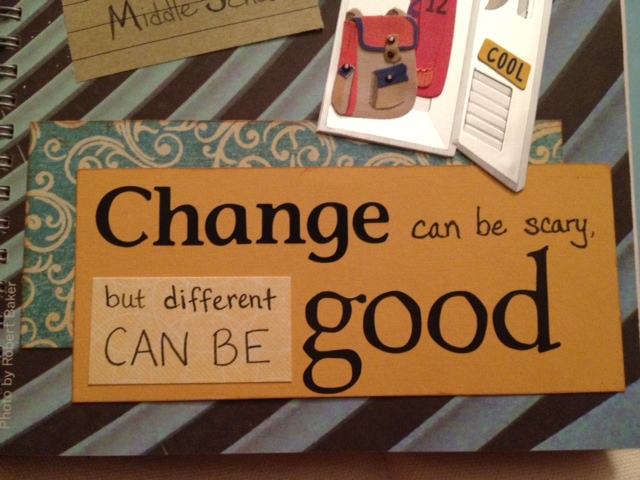
change goodIt just about breaks my heart, because I know on the inside, he is still adjusting to this very big change I have foisted upon him, although on the outside he has been a trooper.  And even though we have talked, and talked, and talked about this for a long, long time, I know it is still hard for him to understand.

A long while ago, I came across the suggestion to make a book about the moving process so that The Boy could have a resource to refer to when he was feeling anxious or unsure.  My lovely mother helped me flesh out the idea, and even did some of the legwork for me, taking pictures of his favorite places in our new area to include in the book.

My goal with the book was to acknowledge his fear, but accentuate the positive.  Tell him what exactly will change, and what will not.  Include pictures of familiar things in our new home and community, and pictures of good times with The Man, and with his grandparents.

I’ve been working on his book for awhile, and I shared it with him tonight, hearing his anxiety once again in his honest question.  We read through each page, and he looked at the pictures.  When we were finished, he was at least smiling.  I asked if he felt better and he said he did.

If you’re going through a move with an autistic child, I highly recommend the National Autism Society (UK)’s page, and a couple of other resources listed below.  You can never begin preparing your child too soon, and creating a moving book is one strategy to help calm those moving anxieties that I think will be so helpful!

Tips for Making a Move More Successful – Different Roads

Tips for Moving with an Autistic Child – Elsia R. Sebastian, Yahoo

Your Most Pressing Liebster Questions, Answered!

Question Mark Graffiti by Bilal KamoonWell, Meredith from Looking Up With Down Syndrome nominated me for the Liebster Award, and I’m going to attempt to answer a few of her questions today.

1.  Why do you blog?

I have always loved to write.  If I hadn’t taught music, I would have taught Language Arts, because words are my thing.  I get that from my mom.  I also blog because I’m not too far from the bewilderment of getting a diagnosis of autism for my son, and also the crazy, life-altering process that is divorce.  Neither experience was fun, and it was difficult to find resources at first.  It still can be, even in this day and age.  Writing this blog helps me to help others, all the while processing my own learning curve with autism, with parenting solo, with blending a family — all of it!  In my book, it’s a win-win-win!

2.  What are you passionate about?

There are so many people on this planet who have less than I do, whether it’s food, money, resources, opportunities…  I know in my heart of hearts that I was put on this planet to help people, and that’s what I get passionate about.  Over the past several years, I’ve come to believe that while government programs are definitely needed and have their place, nonprofits are going to have to be a part of the solution to the world’s most dire problems, because governments are fickle and changing (and usually broke).  It’s going to all come down to each one of us, helping our neighbors, friends, and fellow humans.

3.  Who do you admire?

I admire everyday people who stand up for others.  I admire the strength of regular people who have so much to deal with on a daily basis.  I admire people who think before speaking, and people who always strive to do their best.  I admire people who keep their word, and people who are compassionate.  I admire people who are non-judgmental, and people who are not too proud.

How about you, dear readers?  How would you answer these questions?

The Classification of “Meltdown”

Rainbow pencil

Rainbow pencil (Photo credit: @Doug88888)

There is clearly a difference between a tantrum and a meltdown.  Tantrums are thrown for effect, while meltdowns are thrown because the ability to communicate something has evaporated, and tolerance levels have been exceeded in some way.  But I have noticed my own language lately, in describing behaviors as a “meltdown”, when they aren’t really.  With The Boy, I tend to classify all of the behaviors leading up to a meltdown as “having a meltdown”, so that others who do not have living-with experience with autism will understand.  Many, many times, we are able to avert the big blowout.  In fact, they have been fairly rare, at least in public.  But the behaviors beforehand are no picnic either, and require me to be firing on all engines, brain clicking along, coming up with solutions, ideas, and decisions at lightning speed, much like a battlefield medic.  It’s really a crisis for both of us.

Wouldn’t it be great if there was some universal way of describing this “ramping up” of anxiety pre-meltdown?  Wouldn’t it be great if that became part of the autism awareness and acceptance vernacular?  Like one of those smiley face charts at the doctor’s office that they use to help you decide how much pain you are in, so that you can describe it to them accurately?

“Boss, I’m going to be a few minutes late to work, we are at a level orange on the meltdown scale right now, and hope to have the situation back down to a yellow shortly.”

“Honey, I think we need to find our way to an exit.  This looks like a green heading into yellow territory.”

“Hello, Mrs. Vandenberg, I just wanted to let you know that we had a pretty rough morning, and got up to hot pink because his favorite shirt wasn’t out of the dryer in time for school.”

Of course, the application would probably vary from person to person, but it would provide a little more information than just, “he’s having a meltdown”.

What’s your opinion?  Let us know in the comments

Eye Contact – Not His, Mine

English: 0I’ve noticed that on bad mornings, or during and after a public meltdown, that I avoid eye contact with pretty much everyone I come into contact with.  Some would say that reaction is a clear indication of embarrassment, I guess, but it isn’t — I’m not at all embarrassed by my son and his autism.  That’s who he is, and it isn’t going to change.  It’s nothing to be embarrassed about, because we can’t control it, we can only manage it to the best of our ability.  And sometimes that’s not enough to avoid disrupting our lives and those around us.

I think this natural reaction of mine is so that I can avoid reading other people’s emotions about it.  Whether they are anxious, judgmental, sympathetic, or they pity us, I don’t really want to know.  I don’t have time to care about their feelings about the situation.  I have to make sure The Boy is OK, and then keep it together until I can process my own feelings in a private environment, so that I can go about my day and do what needs to get done.  I don’t want to have to deal with them, too.

Maybe that seems harsh, but it’s a method of survival and coping that has developed naturally.  I can’t take care of everybody else.  My son and my owns self are my first priorities.

Jobs and Autism

I posted a story on the Simple. I Just Do facebook page yesterday about a carwash in Florida that was developed to run entirely with autistic employees, (and was started by a family with an autistic son, no less).  And I encountered a staggering statistic – an unemployment rate of 90% for those with autism.

Food Barn pin from first paycheck job. / c. 1989 - Nate Hofer

Food Barn Pin – Nate Hofer

That is a very scary number.

The article by Doreen Hemlock of the Broward County Sun-Sentinel quoted Michael Alessandri, director of the University of Miami-Nova Southeastern University Center for Autism and Related Diseases, as saying, “Most people with autism can work. They can be very successful when given the right support. There just aren’t enough job opportunities with the right support system.”

The Man and I have discussed starting our own business a great deal.  Part of that, I think a large part of it, is that if we are the owners, we can create our own opportunities for The Boy to be employed.  And just like many, many families with autistic kids are turning to homeschooling so that they can tailor their child’s education according to his/her individualized needs, I think many, many families have or will turn to entrepreneurship for the same reason.

I love it.

I am so inspired by all of this.  The world isn’t ready for this influx of people with autism?  Well, let’s make it ready, one kid, one family, one family-owned business at a time.  Bring it.

Don’t Knock Awareness

autism awareness ribbon

I keep seeing facebook and blog posts, and tweets stating that awareness is just not enough.

Of course awareness is not enough. Acceptance would be lovely, access to therapies, respite care and services would be grand, assurances that my child will be cared for after I am gone would be divine.  And of course, those of us who have the energy will continue our fight for these basic needs (and yes, they are basic needs, as any family touched by autism can attest).

But, we can’t do it alone.  We need armies of people to help us demand that these basic needs be met.  And we don’t have armies, yet.  We can’t even get our own rag-tag assemblage to march under the same banner — we can’t even decide what our banner should say!

So I say we continue with awareness, and not just some event with a puzzle piece on a poster that says “Autism Awareness Night”.  Puzzle pieces, posters, literature, and every autism family in a 50 mile radius in attendance, so those NT attendees can glimpse the spectrum in all its glory: the sweet smiles, the small victories, the hand-flapping, the meltdowns — all of it.  We cannot rely on large national nonprofits to do the work for us.  We have to get our kids out there.  We have to make our presence the norm.  We have to be unapologetic.  We have to use every teachable moment.

Doing all of that creates awareness.  And awareness is where armies are born.

Peace of Mind

peacefulOne of the things that I have been most nervous about the move, OK, more like THE ONE THING that has given me a good bit of anxiety is the program for The Boy in the state/county/school where we will be.  You just never know what you are walking into, even with a diagnosis and an IEP in hand.  You may remember that I had spoken with someone who worked in a county a good bit away from where we were who said they didn’t have a resource room to speak of, and didn’t have any aides in the rooms with the kids.  Considering that The Boy spends a good amount in his resource room, I got a bit panicky about what I was going to be subjecting him to.

I had put out some feelers through some contacts with the state Autism Society, and hadn’t really been able to connect with anyone, until this weekend.  I finally got in contact with some parents who run the local chapter, and was able to speak on the phone with one lady who was able to give me some insight, at least into her experience.  She had also moved into the area a year and a half ago, and has a son that is very close in age to The Boy.  She was able to allay my fears a bit, and let me know about how much their little chapter has been accomplishing.  Not only was I relieved, but I also began to get a little excited.  Here is a group that is actually making positive change in the community for kids on the spectrum, and providing opportunities, and even a summer day camp!  YES!  Exactly what I was hoping for.

Not to mention that this group is a way for us to meet people like us, which will be one of the most difficult parts of the transition for both The Boy and I, making new friends.  I often complain about talking to people on the phone, but this time, I am sooo glad I did.

Another Huge Meltdown

We don’t often see huge meltdowns from The Boy.  We are lucky.  Yesterday, we paid our dues.

We were at a big show in the downtown-big city, at a large convention center, and after being told he couldn’t do an activity because it was time to go home, The Boy started yelling.  I gave my purse to The Man and began walking The Boy to the front of the hall, towards the lobby.  He was yelling the whole time, and got away from me a couple of times, but I eventually got him out to the lobby.  I don’t know what I expected when I got there, but it surely wasn’t the full throttle, running, kicking, screaming (“I’m going to kill you!”, “I’m going to call the police!”), escaping, knocking-down-signs, knocking-down-mom kinda thing I got.

Yep, I got tossed, too.

The Boy is bigger, although he was plenty to handle the last time something like this happened.  I cannot just pick him up (or even attempt to) anymore.  At one point, I looked at The Man and said, “I don’t know what to do,” and there was nothing we could do.  We let it peter out, got him seated on the floor near the coat check, and then my brain kicked in.  He was not listening to me (all I was saying was “stop” because I knew he was too far gone to listen to anything else), so I got on the phone and called people I thought he might listen to.  I got a hold of his ASD teacher, who agreed to speak to him, and within a minute, he was ok enough to get his coat on so we could head home.

The Boy spoke to Fantastic Babysitter in the car on the way home for quite awhile, which was an excellent distraction, and had the desired calming effect.  When we got home, I let him be for awhile, and then we talked about what had happened.  I’m not satisfied that we’ve processed it properly, but I’m going to keep working on it.

The Man and I were shaken, but he was perfect.  He held my purse, and followed us (but not too closely!) during the whole thing, even speaking with a few people who were concerned.  He said this morning like he felt he hadn’t done enough, but he did — he helped me with the aftermath, my aftermath.  I was wrecked, emotional, and exhausted, and he took care of me.  That’s what I need from him — I need him to look after me, so that I’m OK to look after my son.

It was an emotional day, but I was proud of myself for remaining relatively calm, and not resentful of The Boy at all.  I felt so bad that we had a breakdown in communication, and I felt bad that he lost control.  I can only guess what that feels like, and I’m sure I wouldn’t like it.  I was proud of him for coming out of it, and I was proud of The Man for how he handled himself.  Now I need to go see what I can do about these sore muscles…

Tackling a Few Myths About Autism

How can there still be so much misinformation about autism?  I understand that there is a lot of research going on, and there is still a lot that is unknown, but really?  Here are a few common misconceptions:

  • People with autism do not have empathy.

My son has empathy.  There have been times (like on my birthday a few years ago), where I thought he lacked a shred of it, but there have been times that he has comforted me when I was crying or upset, or just needed a hug.  In fact there are many who will say that people on the spectrum have too much empathy, and that is why they have to distance themselves from others, because they just feel too much.  I particularly like Diary of a Mom’s post on this subject.

  • People with autism are either really good at things or really bad at things.

I believed this one for awhile, too, thinking The Boy was just really, really smart.  At everything.  And he is extremely bright.  But you know what?  He doesn’t get math too well.  He has a great ear for music, is a wonderful speller, doesn’t like to read a whole bunch, although he can, and at a high level of comprehension.  But math is not his best subject.  I used to think it was because he didn’t like it, which is partly true.  Truth be told, he struggles with it, and I’m not sure I can say it’s just because he’d rather be playing video games.  But he doesn’t fail math either.  In fact, he usually gets Cs.

  • People with autism do not have good eye contact.

This is one of the reasons I was not so sure he was on the spectrum in the very early days.  In everything I had heard, this was the number one “sign your child may have autism” and it just didn’t bear true for The Boy.  He was a happy, giggly boy, and did not avoid eye contact as an infant, toddler, or small child.  It is more apparent now, but this is not a hard and fast rule for all children on the spectrum, by any means.

Happy, Giggly Eye Contact

  • People with autism may not have it forever.

This site, which attempts to address some myths about autism, actually has this listed as fact, rather than a myth!  This is basic stuff, here people.  There is no cure.  Autism is a neurological disorder, and you cannot “fix” a neurological disorder.  You can, with early intervention and therapy “retrain the brain” to function more typically, but autism is for keeps. And this “research that shows you may outgrow autism” consists of one study.  With fewer than 40 participants.  What’s really at work here is those early interventions and therapies allowing those with autism to be able to function more typically in society, rather than not having autism anymore.  They just hide it better.  (Won’t it be a great day when our children don’t have to hide their true selves?)

What are some other myths you’ve encountered?